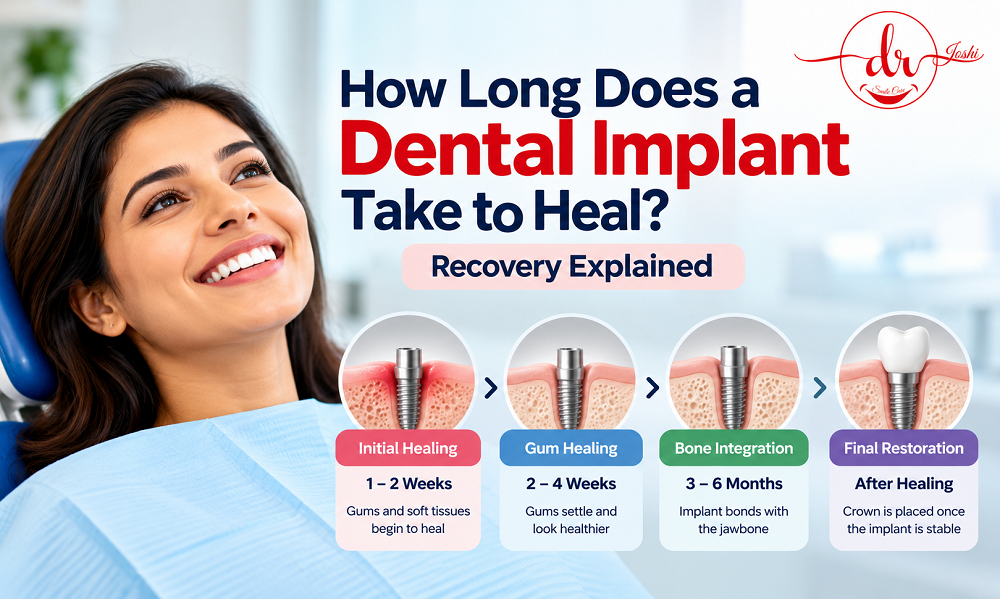
A dental implant usually needs several months to heal fully, although the initial recovery after surgery is much shorter. Most patients experience the main postoperative discomfort during the first few days, with the surgical site beginning to settle over the first week or two. The jawbone generally needs around 3–6 months, and sometimes longer, to bond securely with the implant before the final crown can be placed.
The exact dental implant healing time depends on bone quality, gum health, the complexity of surgery, whether bone grafting is required and how well the patient follows postoperative instructions.
Initial recovery after dental implant surgery commonly takes about one week, although local tissue healing may continue for another week or two.
Bone healing takes considerably longer than the initial gum recovery.
A dental implant often needs approximately 3–6 months to integrate with the jawbone, but some cases take longer.
Bone grafting or other additional procedures can extend the overall treatment timeline.
Follow-up appointments help the dentist assess healing and determine when the implant is ready for its final restoration.
How Long Does a Dental Implant Take to Heal Completely?
Complete dental implant healing involves more than the gums closing over the surgical site. The implant must also become securely integrated with the jawbone.
There are two important parts of recovery:
Initial healing: The gums and surrounding soft tissues begin to recover during the first several days. Swelling, tenderness and minor bruising generally improve over the first week, although recovery varies between patients.
Bone integration: The jawbone gradually bonds with the implant surface through a process called osseointegration. This commonly takes several months and must be assessed before the implant is loaded with its final restoration.
In many cases, bone integration takes around 3–6 months. Some patients need a longer period, depending on the procedure and their healing response.
The dentist determines when the implant is sufficiently stable for the next stage of treatment. The calendar alone cannot confirm that healing is complete.
Dental Implant Recovery Timeline: What Happens at Each Stage?
The following timeline provides a general guide to recovery after dental implant surgery. Your individual schedule may differ.
Recovery stage
What may happen
First 24 hours
Mild bleeding, tenderness and swelling may occur as the surgical site begins to heal.
Days 2–3
Swelling and bruising may become more noticeable before gradually improving.
Days 4–7
Discomfort usually begins to settle, and normal daily activities may become easier.
Weeks 1–2
The gums continue to heal. A follow-up appointment may be used to check the surgical site and remove stitches if required.
Months 1–3
Bone healing and integration continue beneath the gums. The implant may still need protection from excessive loading.
Months 3–6 or longer
The dentist assesses implant integration and determines whether the implant is ready for its final crown, bridge or denture.
These stages overlap, and the table should not be treated as a fixed schedule for every patient. Some implant procedures involve different surgical techniques, and bone grafting may extend recovery.
What Are the Different Stages of Dental Implant Healing?
Stage 1: Initial recovery after surgery
During the first few days, the body begins repairing the tissues affected by surgery. You may experience soreness, swelling, minor bleeding or bruising around the implant site.
These symptoms should generally improve over time. Your dentist will provide instructions about eating, oral hygiene, medication and activity.
Avoid disturbing the surgical area, and follow the instructions provided by your treating dentist rather than relying on a general recovery schedule.
Stage 2: Gum healing
During the following one to two weeks, the gum tissue continues to recover around the surgical site. Stitches may need to be removed, depending on the type of sutures used.
The gums may look healthier before the underlying bone has fully integrated with the implant. Therefore, a healed-looking gum surface does not necessarily mean the implant is ready for the final crown.
Stage 3: Osseointegration — when the jawbone bonds with the implant
Osseointegration is the biological process through which the jawbone forms a stable connection with the dental implant.
The implant acts as an artificial tooth root. As healing progresses, bone develops and remodels around its surface, helping provide the stability required to support a replacement tooth.
This process takes several months. Its duration depends on the individual patient, bone quality, implant location, surgical conditions and other clinical factors.
Your dentist may use clinical examination and appropriate imaging to assess healing when needed.
Stage 4: Abutment and final crown placement
Once the implant has healed sufficiently, the dentist can proceed with the restorative stage.
An abutment is a connector that supports the replacement tooth. Depending on the treatment plan, the dentist may need to expose the implant or perform a minor additional procedure before attaching the abutment.
The final crown, bridge or denture is then prepared and fitted. The number of appointments and the time needed for this stage depend on the restoration and the individual case.
What Factors Affect Dental Implant Healing Time?
Not everyone recovers at the same pace. Several factors can influence how long the process takes.
1. Jawbone quality and quantity
The implant needs suitable bone support. If the jawbone is insufficient, the dentist may recommend a bone graft or another preparatory procedure.
The additional healing period can lengthen the overall treatment plan.
2. Bone grafting or additional surgery
Some patients require bone augmentation, a sinus lift or other procedures before or during implant placement.
These procedures have their own recovery requirements. Your dentist will explain whether the additional treatment changes the expected timeline.
3. Gum health and oral hygiene
Healthy gums and good plaque control are important for healing. Existing gum disease should be assessed and managed as appropriate before implant treatment.
Poor oral hygiene can increase the risk of inflammation and complications around the implant.
4. Smoking and tobacco use
Smoking can interfere with wound healing and is associated with an increased risk of implant complications. Patients should discuss smoking or tobacco use honestly with their dentist and seek advice about stopping before surgery and throughout recovery.
5. General health and medications
Certain medical conditions and medications can influence healing or affect the suitability and timing of implant treatment.
Tell your dentist about your medical history and every medication you take. Do not stop a prescribed medicine without advice from the prescribing clinician.
6. Surgical complexity and implant location
A straightforward single-tooth implant may follow a different timeline from a case involving multiple implants, substantial bone grafting or more complex reconstruction.
The dentist will determine the appropriate healing period according to the procedure and the patient’s progress.
What Should You Eat After Dental Implant Surgery?
Your diet should protect the surgical site while allowing you to maintain adequate nutrition.
Foods that may be suitable during early recovery
Depending on your dentist’s instructions, suitable options may include:
Soft, well-cooked vegetables.
Mashed potatoes.
Soft rice or khichdi.
Yogurt or curd.
Scrambled eggs.
Smooth soups that are not too hot.
Soft fish or other tender protein sources.
Choose foods that are easy to chew and avoid putting unnecessary pressure on the implant site. If the surgery involved bone grafting or several implants, your dentist may recommend a more specific diet.
Foods and habits to avoid
During the initial healing period, avoid hard, crunchy, sticky or very hot foods if they could irritate the surgical site. Avoid chewing directly over the implant until your dentist says it is appropriate.
Do not smoke, and follow your dentist’s advice about alcohol and physical activity. Avoid using straws or forcefully spitting if instructed, as these actions may disturb the healing wound.
Gradually return to your normal diet only as recommended by your treating dentist.
How Should You Care for Your Mouth After Dental Implant Surgery?
Good postoperative care supports recovery and helps reduce the risk of complications.
Follow your dentist’s instructions. Use prescribed medicines and mouth rinses exactly as directed.
Keep your mouth clean. Brush and clean your teeth as advised, taking care around the surgical area.
Manage swelling appropriately. If recommended by your dentist, use a cold pack wrapped in a cloth for short intervals during the early recovery period.
Avoid unnecessary pressure. Do not poke the implant site with your fingers or tongue, and avoid chewing hard foods on the affected side until cleared.
Attend follow-up visits. Your dentist needs to assess healing and decide when to progress to the next treatment stage.
Avoid tobacco. Smoking and other tobacco use can compromise recovery.
Do not start antibiotics, change medication doses or use home remedies on the surgical site without professional guidance.
When Can You Return to Work and Normal Activities?
Many patients can resume light daily activities within a day or two after uncomplicated implant surgery. However, more extensive surgery may require additional rest.
The appropriate return-to-work date depends on the number of implants placed, the use of sedation, the nature of your job and your recovery.
Strenuous exercise should generally be avoided during the initial postoperative period, according to your dentist’s instructions. Physical activity can be resumed gradually as healing progresses.
If your work involves heavy lifting, significant physical exertion or long periods away from follow-up care, discuss the timing with your dentist before surgery.
When Should You Contact Your Dentist After Implant Surgery?
Some tenderness, swelling and minor bleeding can occur during early recovery. Symptoms that worsen rather than improve need attention.
Contact your dentist promptly if you experience:
Increasing or severe pain.
Swelling that worsens or returns after initially improving.
Persistent bleeding that does not stop with the recommended pressure.
Fever, pus or other signs that may indicate infection.
A loose implant or a component that feels unstable.
Difficulty swallowing or other unusual symptoms.
Seek urgent medical care if you develop difficulty breathing, rapidly spreading facial or neck swelling, or difficulty swallowing that could indicate a serious complication.
Do not wait for a routine follow-up appointment if symptoms are severe or rapidly worsening.
Does a Dental Implant Heal Faster With a Temporary Tooth?
A temporary tooth may sometimes be provided during implant treatment to improve appearance or function while healing continues. However, having a temporary tooth does not automatically mean the implant has fully integrated with the bone.
In selected cases, an implant may support an immediate or early temporary restoration. This depends on factors such as implant stability, bone conditions, the bite and the overall treatment plan.
Some patients must wait for a longer healing period before receiving their final crown.
Your dentist will explain whether a temporary restoration is appropriate and how to avoid excessive pressure on the implant during healing.
Can a Dental Implant Fail to Heal Properly?
Dental implants have a high success rate overall, but successful healing is not guaranteed.
Problems can arise if the implant does not integrate adequately with the bone or if infection and other complications develop. Smoking, uncontrolled medical conditions, poor oral hygiene and certain surgical factors may increase risk.
Possible warning signs include persistent or increasing pain, swelling, discharge, bleeding or movement of the implant.
These symptoms require professional assessment. They do not necessarily mean the implant has failed, but they should not be ignored.
Regular follow-up appointments allow the dentist to monitor healing and recommend appropriate action if a problem develops.
How Do You Know When Your Dental Implant Is Fully Healed?
There is no single symptom that confirms complete healing. Reduced swelling and comfortable gums are encouraging signs, but they do not establish that the bone has fully integrated with the implant.
Your dentist assesses the surgical site, implant stability and overall treatment progress before deciding whether the final restoration can be placed.
Do not test the implant by pushing it or chewing hard foods on it. Follow the loading and dietary instructions provided by your treating dentist.
Dental Implant Healing Time in Bhopal: What Should Patients Expect?
For patients considering dental implants in Bhopal, the overall treatment schedule should be based on an individual dental assessment rather than a fixed number of days.
Your dentist may examine your gums and teeth, review your medical history and use appropriate dental imaging to assess the available bone and plan treatment.
If bone grafting or other preparatory treatment is needed, the timeline may be longer. If the implant heals as expected, the restorative stage can proceed when your dentist confirms that it is appropriate.
Before starting treatment, ask about the expected healing period, follow-up visits, temporary tooth options, final crown placement and any additional procedures that may be necessary.
Dr. Joshi Smile Care can be approached for a dental consultation in Bhopal to discuss your treatment needs and the recovery plan appropriate for your case.
Conclusion
Dental implant healing time varies from patient to patient. Initial postoperative recovery often takes around one week, while gum healing may continue for one to two weeks or longer. The deeper process of bone integration generally takes several months and may extend beyond six months in more complex cases.
The most important step is to follow your dentist’s postoperative instructions and attend scheduled reviews. The implant should receive its final restoration only when the treating dentist determines that healing and stability are sufficient.
If you are considering dental implants in Bhopal, an individual assessment can help you understand the expected timeline, any additional procedures and the steps involved in restoring your smile.
1. How many months does a dental implant take to heal?
Many dental implants require approximately three to six months for bone integration, although some cases take longer. The initial recovery period is shorter, and your dentist will assess when the implant is ready for restoration.
2. How long does pain last after dental implant surgery?
Tenderness and discomfort are common during the first few days and generally improve over the first week. Severe, increasing or persistent pain should be assessed by your dentist.
3. When can I eat normally after dental implant surgery?
You may need soft foods during the initial recovery period. The timing for returning to harder foods depends on the procedure and whether the implant can safely tolerate chewing forces. Follow your dentist’s advice.
4. Can a dental implant heal in one month?
The gums may show substantial improvement within a month, but that does not mean the implant has fully bonded with the jawbone. Bone integration usually takes several months.
5. Does bone grafting increase dental implant healing time?
Yes. Bone grafting introduces an additional healing stage and can extend the overall treatment timeline. The extra time depends on the type of graft and the individual clinical situation.
6. When can the final crown be placed after a dental implant?
The crown is fitted when the implant has achieved sufficient stability and healing. This often occurs after several months, but the timing varies according to the patient’s condition, surgical technique and whether additional procedures were needed.
Disclaimer
The information provided is for educational purposes only and is not a substitute for professional dental advice, diagnosis, or treatment. Consult your dentist for personalised guidance on dental implant healing and recovery.
Dr. Viplav Joshi is a Bhopal-based dental professional with 25+ years of experience in root canal treatment and restorative dentistry, committed to patient-centred dental care and oral health education at Dr. Joshi Smile Care.