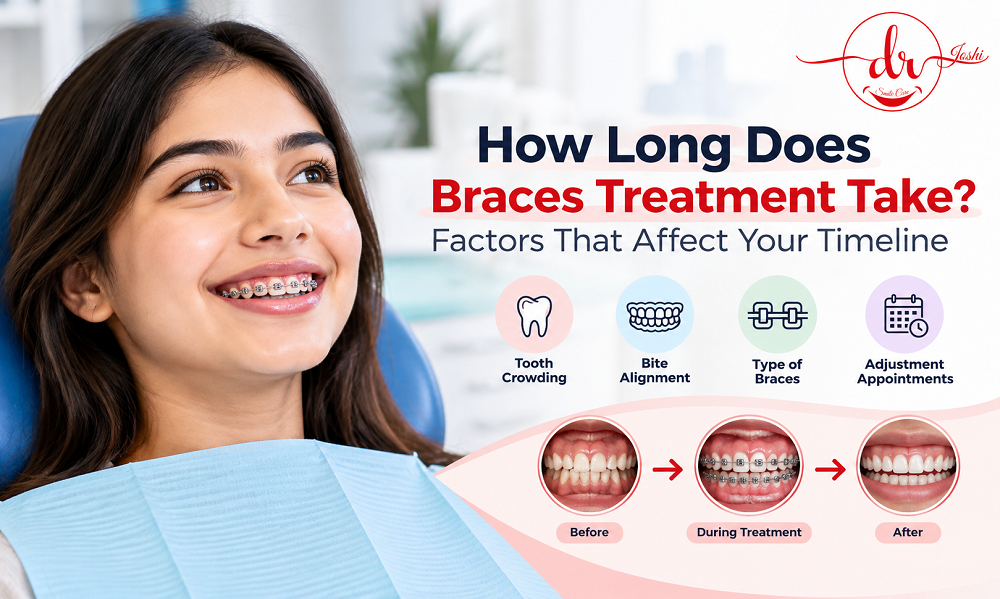
If you are wondering how long braces take, orthodontic treatment commonly lasts around 12–24 months, although some cases need less time and others take several years. The duration depends on tooth crowding, bite alignment, treatment complexity, oral health and how consistently you follow your orthodontist’s instructions. An individual assessment is needed to estimate your own treatment timeline.
Many patients wear braces for approximately 12–24 months, but treatment duration varies by individual.
Mild tooth crowding or spacing may require less time than complex bite or jaw alignment problems.
Regular orthodontic appointments, good oral hygiene and following treatment instructions can help keep treatment on track.
Broken brackets, missed appointments and untreated dental problems can delay progress.
Braces removal is not the end of treatment. Retainers help maintain the corrected tooth positions.
How Long Does Braces Treatment Usually Take?
Braces treatment often takes 12–24 months, but there is no single timeline that applies to everyone. Some people need only limited tooth movement, while others require more extensive correction of crowding, spacing or bite alignment.
The American Association of Orthodontists describes treatment duration as dependent on the individual problem and notes that most patients wear braces for 12–24 months. More complex cases can take longer.
Your orthodontist estimates the treatment duration after examining your teeth and bite, reviewing relevant dental records and deciding which movements are needed.
Estimated Braces Treatment Timeline
Type of orthodontic problem
General expectation
Mild crowding or spacing
May take less time than comprehensive treatment
Moderate alignment problems
Often treated within the typical 12–24-month range
Complex crowding or bite problems
May require two years or longer
Cases involving significant jaw discrepancies or additional procedures
May take several years, depending on the treatment plan
These are broad descriptions, not guaranteed treatment times or a personalised prediction. The actual duration depends on your diagnosis and the movements required.
What Factors Affect How Long Braces Take?
Several clinical and practical factors influence the orthodontic treatment timeline.
1. The Severity of Tooth Crowding
Mildly crowded teeth may need fewer movements than teeth with substantial overlapping, rotation or spacing problems. However, the visible appearance of your front teeth does not tell the whole story.
An orthodontist also evaluates the roots, the relationship between the upper and lower teeth, available space and the stability of the intended result.
For this reason, correcting a small visible gap is not necessarily the same as completing comprehensive orthodontic treatment.
2. Bite Alignment and Jaw Position
Braces can be used to correct problems such as overbite, underbite, crossbite and other bite discrepancies.
If treatment involves only aligning teeth, the plan may be relatively straightforward. If the orthodontist also needs to correct how the upper and lower teeth meet, additional movements or appliances may be required.
Significant jaw discrepancies can make treatment more complex and may require a combination of orthodontic treatment and other procedures.
3. The Type of Braces You Choose
Metal braces, ceramic braces and other orthodontic appliances differ in appearance, design and suitability.
However, the appliance that looks most advanced or discreet is not automatically the fastest option. Treatment duration depends on whether the appliance can address your specific problem, the planned tooth movements and how the treatment progresses.
Your orthodontist can explain which options are appropriate for your teeth and whether their expected treatment times differ in your case.
4. Your Age and Dental Development
Both teenagers and adults can benefit from orthodontic treatment. Age alone does not determine how long braces will take.
For children and teenagers, the stage of dental development and whether the jaws are still growing may influence treatment planning. For adults, the orthodontist must consider existing restorations, gum health, bone support, missing teeth and other dental conditions.
An adult may need a similar treatment duration to a younger patient with a comparable problem. A reliable estimate depends on the individual examination rather than age alone.
5. Oral Health Before and During Treatment
Healthy teeth and gums are important before braces are fitted and throughout treatment.
Cavities, gum disease or other dental problems may need attention before orthodontic treatment begins or while it is underway. Maintaining oral hygiene also helps reduce the risk of complications that could interrupt treatment.
Brush carefully with fluoride toothpaste, clean around brackets and wires, and follow your dental professional’s recommendations for cleaning between teeth.
6. Missed Appointments and Broken Brackets
Regular orthodontic appointments allow your clinician to assess progress and make adjustments when needed.
Missing appointments may delay planned treatment steps. A loose bracket or broken wire can also interfere with the intended tooth movement and may require an additional visit.
Contact your orthodontic clinic if an appliance breaks rather than waiting until your next scheduled appointment.
7. Following Your Orthodontist’s Instructions
Your cooperation is an important part of treatment.
Depending on your treatment plan, your orthodontist may ask you to wear elastic bands, use additional appliances, follow dietary precautions or attend appointments at specific intervals.
Not following these instructions can make treatment less predictable or extend the overall timeline. Do not attempt to speed up tooth movement by changing elastics, applying extra force or adjusting braces yourself.
How Long Do Braces Take for Mild Crowding?
Mild crowding can sometimes be corrected in less time than comprehensive orthodontic treatment. However, the exact duration depends on the tooth movements required and whether the bite also needs correction.
For example, teeth that appear slightly crooked may also have rotated roots or an underlying bite problem. Moving only the visible front teeth may not address the full issue.
During your consultation, ask whether the recommended plan involves limited alignment or comprehensive treatment, and what the expected result will include.
How Long Do Braces Take for Adults?
Adult braces treatment may take several months to a few years, depending on the complexity of the case. Many adults fall within the general 12–24-month treatment range, but more involved cases can take longer.
Treatment planning may need to account for:
Existing crowns, fillings or missing teeth.
Gum health and the condition of the supporting bone.
Tooth crowding, spacing and bite alignment.
Previous orthodontic treatment and any relapse.
The need to coordinate treatment with other dental procedures.
Adults should not assume that braces will necessarily take longer simply because they are older. An orthodontic examination provides a more useful estimate.
How Often Do Braces Need Adjustment Appointments?
Many patients with fixed braces attend adjustment appointments approximately every 4–8 weeks, although the interval varies according to the appliance, treatment stage and clinician’s instructions. Some treatment plans use different intervals.
During these appointments, the orthodontist checks how the teeth are moving, evaluates the bite, inspects the appliance and decides whether adjustments are needed.
The appointments themselves are only one part of the process. Most tooth movement happens gradually between visits, so attending regularly and following instructions are important.
Can You Make Braces Treatment Faster?
You cannot safely force teeth to move faster than the treatment plan allows. However, you can help avoid preventable delays.
Follow these practical steps:
Attend scheduled orthodontic appointments.
Wear prescribed elastics or other appliances exactly as instructed.
Brush thoroughly and maintain healthy gums.
Avoid foods that your orthodontist advises against because they could damage your braces.
Contact the clinic promptly about loose brackets, broken wires or other appliance problems.
Follow recommendations for treating cavities or gum problems.
Ask your orthodontist about progress if the treatment timeline changes.
Avoid products or techniques that promise rapid tooth movement without proper clinical supervision. Excessive or inappropriate forces can harm teeth and their supporting tissues.
What Happens During the Braces Treatment Timeline?
Orthodontic treatment generally follows several stages.
Stage 1: Consultation and Assessment
The orthodontist examines your teeth and bite, discusses your concerns and determines what needs to be corrected. Photographs, dental X-rays or other records may be recommended when clinically appropriate.
The findings help establish a treatment plan and an estimated duration.
Stage 2: Preparing Your Teeth
If you have cavities, gum problems or other conditions requiring attention, these may need to be addressed before braces are fitted.
The timing depends on your oral health and the treatment plan.
Stage 3: Fitting the Braces
The brackets and wires are placed according to the planned treatment. Your orthodontist explains how to clean your teeth, which foods to avoid and how to manage common problems.
Mild tenderness after fitting is common, particularly during the first few days.
Stage 4: Active Tooth Movement
You attend regular appointments so your orthodontist can assess progress and make adjustments when required.
The duration of this stage depends on how the teeth and bite respond to treatment.
Stage 5: Braces Removal and Retention
Once the planned correction is complete, your orthodontist removes the braces and provides a retention plan.
Retainers help keep teeth in their corrected positions. Teeth can shift after active treatment, so wearing your retainer as instructed is an essential part of maintaining the result.
Do Braces Take Longer If You Miss an Appointment?
They can. Missing an appointment may delay adjustments, progress checks or other planned treatment steps. Repeated missed visits can make the overall timeline less predictable.
If you cannot attend, contact your orthodontic clinic to arrange another appointment. If a bracket breaks or a wire becomes displaced, ask the clinic what to do rather than waiting for your next routine visit.
When Should You Consult an Orthodontist?
Consider an orthodontic assessment if you have crowded or overlapping teeth, noticeable gaps, difficulty bringing your teeth together comfortably, or concerns about your bite.
An assessment is also useful if you are comparing braces with clear aligners or want to understand whether limited alignment or comprehensive treatment is appropriate.
Seek prompt dental advice if you have significant pain, swelling, bleeding gums or another dental problem before or during treatment. These symptoms need assessment rather than an assumption that they are simply part of wearing braces.
Conclusion
Braces treatment commonly takes around 12–24 months, although mild alignment problems may require less time and complex cases may take several years. The main factors include crowding, bite alignment, dental health, treatment complexity and how consistently you follow your orthodontist’s instructions.
If you are considering braces in Bhopal, an orthodontic consultation can help you understand the treatment options, expected duration, appointment schedule and retention requirements before you begin.
1. What is the average duration of braces treatment?
Many patients wear braces for approximately 12–24 months. The duration can be shorter for selected minor corrections or longer for complex orthodontic problems.
2. Can braces straighten teeth in six months?
Some limited alignment treatments may take around six months, but this is not suitable for every patient and may not correct the full bite. An orthodontist should assess whether limited treatment would meet your clinical needs.
3. Do adults take longer to get their teeth straightened?
Not necessarily. Adults can undergo successful orthodontic treatment, and age alone does not determine the timeline. The condition of the teeth and gums, the bite problem and the treatment plan are more useful factors.
4. How often should I visit my orthodontist while wearing braces?
Many patients with fixed braces attend appointments every 4–8 weeks, but the interval depends on the appliance and treatment plan. Follow the schedule provided by your orthodontist.
5. Does wearing a retainer mean braces treatment is still going on?
Active braces treatment has finished when the braces are removed, but retention is a separate phase. Retainers help maintain the result, and your orthodontist will explain how and when to wear yours.
6. Can broken brackets delay braces treatment?
Yes. A broken or loose bracket may interfere with planned tooth movement and require repair. Contact your orthodontic clinic for advice if an appliance breaks.
Disclaimer
This article is for general informational purposes only and should not replace professional dental advice. Braces treatment duration varies for each patient. Consult a qualified orthodontist for a personalised assessment and treatment plan.
Dr. Viplav Joshi is an experienced dental professional at Dr. Joshi Smile Care, Bhopal, with 25+ years of experience in root canal treatment and restorative dentistry. He is committed to providing patient-focused dental care and oral health education.