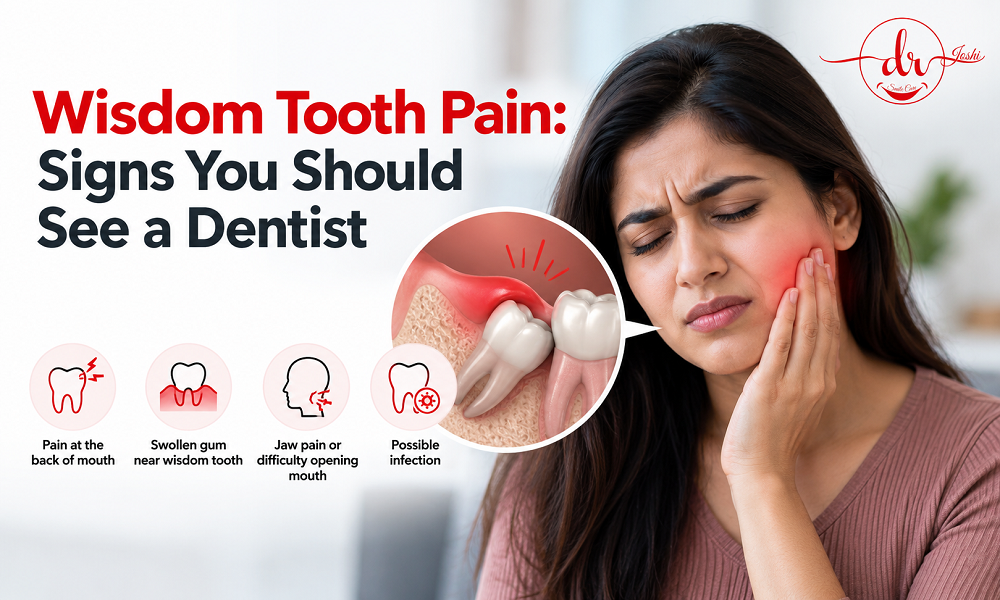
Wisdom tooth pain symptoms can include pain at the back of the mouth, swollen or tender gums, jaw discomfort, bad breath and difficulty opening your mouth. These symptoms may occur when a wisdom tooth is erupting, trapped beneath the gum or affected by inflammation, decay or infection. Persistent or worsening pain should be assessed by a dentist. Facial or neck swelling, fever or difficulty swallowing or breathing requires urgent medical attention.
Key Takeaways
- Wisdom tooth pain can result from normal eruption, impaction, gum inflammation, tooth decay or infection.
- A swollen gum near a wisdom tooth, unpleasant taste, pus or increasing jaw pain may indicate a dental problem that needs assessment.
- Not every impacted wisdom tooth needs removal. The decision depends on its position, symptoms and effect on surrounding tissues and teeth.
- Fever, spreading facial swelling or difficulty swallowing or breathing should never be ignored.
- A dental examination and, when indicated, X-rays can help determine the cause and appropriate treatment.
What Are the Common Wisdom Tooth Pain Symptoms?
Wisdom teeth, also called third molars, are the last permanent teeth to emerge. They commonly erupt during the late teenage years or early adulthood, although timing varies.
When a wisdom tooth has enough room to emerge and is positioned correctly, it may cause little or no discomfort. Problems can develop when the tooth is partly erupted, trapped under the gum or difficult to clean.
Common wisdom tooth pain symptoms include the following.
1. Pain at the Back of the Mouth
Pain or tenderness behind the last molar is one of the most recognisable symptoms. It may feel like pressure, aching or soreness near the back of the upper or lower jaw.
Pain that persists, returns repeatedly or becomes more intense deserves a dental assessment. The cause may be an erupting wisdom tooth, gum inflammation, tooth decay or another dental condition.
2. Swollen Gum Near the Wisdom Tooth
A swollen gum near a wisdom tooth may develop when the tooth emerges only partially. A flap of gum tissue can cover part of the tooth, creating an area where food particles and bacteria collect.
This can cause redness, tenderness, swelling and discomfort during chewing. Inflammation around a partially erupted tooth is known as pericoronitis.
If swelling persists, recurs or is accompanied by an unpleasant taste, discharge or increasing pain, contact a dentist rather than attempting to clean beneath the gum flap with sharp objects.
3. Jaw Pain or Difficulty Opening Your Mouth
Inflammation around a wisdom tooth can cause discomfort that spreads into the jaw. Some people notice stiffness or pain when chewing, yawning or opening their mouth.
Difficulty opening the mouth can also be a warning sign when it occurs with increasing swelling, fever or other signs of infection. Seek prompt dental assessment if this happens.
4. Bad Breath or an Unpleasant Taste
A partially erupted wisdom tooth can be difficult to clean thoroughly. Food and bacteria may collect around the tooth and underneath the surrounding gum tissue.
You may notice persistent bad breath, an unpleasant taste or discharge from the affected area. These symptoms can indicate inflammation or infection, particularly when they occur with swelling or pain.
5. Red, Tender or Bleeding Gums
The gum surrounding a wisdom tooth may become red, irritated or bleed during brushing. This can happen when plaque accumulates around a tooth that is difficult to reach.
Bleeding alone does not confirm a wisdom tooth infection. However, repeated bleeding combined with pain, swelling or difficulty cleaning the area should be checked by a dentist.
6. Pain When Chewing
Chewing may become uncomfortable if the gum surrounding a wisdom tooth is inflamed or if the tooth has developed decay. Food may also press against sensitive gum tissue around a partially erupted tooth.
Do not assume that pain while chewing is always caused by a wisdom tooth. A neighbouring molar, cracked tooth or another dental problem can produce similar symptoms.
What Are the Signs of Impacted Wisdom Teeth?
An impacted wisdom tooth is a tooth that cannot emerge normally because it is blocked or lacks sufficient space. It may remain completely beneath the gum or jawbone, or it may emerge only partially.
Signs of impacted wisdom teeth can include:
- Pain or pressure behind the last molar.
- Tender, red or swollen gum tissue.
- Recurrent swelling around a partially erupted tooth.
- Food getting trapped near the affected area.
- Bad breath or an unpleasant taste.
- Jaw discomfort or difficulty opening the mouth.
- Decay or gum problems affecting the wisdom tooth or an adjacent molar.
Some impacted wisdom teeth cause no noticeable symptoms. Others can contribute to infection, decay or damage to neighbouring teeth.
A dentist may examine the area and recommend dental X-rays when needed to assess the tooth’s position and its relationship to surrounding structures. Symptoms alone cannot confirm whether a tooth is impacted.
What Are the Symptoms of a Wisdom Tooth Infection?
Wisdom tooth infection symptoms may develop when bacteria affect the gum tissue around a partially erupted tooth or when decay and other dental problems cause infection.
Possible warning signs include:
- Increasing pain around the wisdom tooth.
- Red, swollen or tender gum tissue.
- Pus or discharge around the tooth.
- A persistent unpleasant taste or bad breath.
- Facial swelling.
- Fever or feeling generally unwell.
- Difficulty opening the mouth.
These symptoms do not all have the same level of urgency. Localised pain or gum swelling warrants prompt dental advice, while fever, spreading swelling or worsening symptoms require more urgent assessment.
When Is Wisdom Tooth Pain an Emergency?
Seek urgent dental care for increasing pain accompanied by swelling, pus, fever or difficulty opening your mouth.
Go to an emergency department immediately if you develop difficulty breathing or swallowing, rapidly spreading swelling in the face or neck, or swelling that affects the floor of your mouth. These symptoms can indicate a potentially serious spreading infection.
Do not wait for a routine appointment if breathing or swallowing is affected.
Why Does a Wisdom Tooth Hurt?
Several conditions can cause wisdom tooth pain. Identifying the cause matters because treatment differs from one condition to another.
Normal Tooth Eruption
As a wisdom tooth begins to emerge, the surrounding gum may feel tender. Mild discomfort can occur, but persistent, severe or worsening pain should not automatically be attributed to normal eruption.
Impacted or Partially Erupted Tooth
A wisdom tooth may not have enough space to emerge fully. It can become trapped under the gum or grow at an angle, contributing to pressure, inflammation or difficulty cleaning the area.
Pericoronitis
Pericoronitis is inflammation of the gum tissue around a partially erupted tooth. Food debris and bacteria can collect beneath the gum flap, leading to pain, swelling and sometimes infection.
Tooth Decay
Wisdom teeth are located at the back of the mouth, where brushing and flossing may be more difficult. Decay can develop in the wisdom tooth or the neighbouring molar.
Gum Disease or Damage to Nearby Teeth
An incorrectly positioned wisdom tooth may make cleaning difficult and contribute to gum problems. In some cases, it can also affect the health of the adjacent molar.
Because these conditions can produce overlapping symptoms, a dental examination is more reliable than trying to identify the cause from pain alone.
What Should You Do If Your Wisdom Tooth Hurts?
If you have mild wisdom tooth discomfort and no emergency warning signs, the following measures may help while you arrange appropriate dental advice.
- Keep the area clean. Brush gently with a soft toothbrush and take care around the painful area.
- Try a warm saltwater rinse. Mix half a teaspoon of salt into a glass of warm water, rinse gently and spit it out. Do not swallow the solution.
- Choose softer foods temporarily. Avoid foods that repeatedly press against the painful gum.
- Consider an appropriate pain reliever. Ask a pharmacist or healthcare professional which medicine is suitable for you, especially if you have other medical conditions, take other medicines or are pregnant.
- Arrange a dental assessment. Seek advice if the pain persists, recurs, worsens or is accompanied by swelling or other concerning symptoms.
These steps may ease discomfort temporarily but do not remove an impacted tooth or reliably treat an underlying infection.
Do not place aspirin directly on the gum, try to cut or lift the gum flap yourself, or take leftover antibiotics without professional advice.
Does Every Painful Wisdom Tooth Need Removal?
No. Wisdom tooth removal is not automatically necessary whenever a wisdom tooth hurts or is impacted.
A dentist considers the tooth’s position, whether it can be cleaned, the presence of decay or gum disease, evidence of infection, damage to adjacent teeth and the likelihood of further problems.
Depending on the findings, management may involve:
- Monitoring a healthy, problem-free wisdom tooth.
- Professional cleaning and treatment of inflammation around a partially erupted tooth.
- Treating decay or another identifiable dental problem.
- Removing the wisdom tooth when it causes disease, damage or other clinically significant problems.
The dentist may recommend extraction if the tooth is contributing to recurrent infection, cannot be restored appropriately or is damaging neighbouring structures. The benefits, risks and alternatives should be explained before treatment.
What Happens During a Wisdom Tooth Examination?
A dental assessment typically involves reviewing your symptoms and medical history, examining the painful area and checking for swelling, gum inflammation, decay or other possible causes of pain.
Dental X-rays may be recommended when the dentist needs to assess the tooth’s position, root anatomy or relationship to nearby structures.
If removal is being considered, the dentist will explain the treatment options and whether referral to an oral surgeon is appropriate. The decision should be based on clinical findings rather than symptoms alone.
When Should You See a Dentist for Wisdom Tooth Pain in Bhopal?
Arrange a dental appointment if you experience persistent or recurring pain at the back of your mouth, swollen gums near a wisdom tooth, pain while chewing, difficulty cleaning the area or an unpleasant taste that does not resolve.
Seek prompt care if you notice pus, increasing swelling, fever or difficulty opening your mouth. Emergency symptoms such as difficulty breathing or swallowing require immediate hospital assessment.
At Dr. Joshi Smile Care in Bhopal, patients can seek a dental assessment to understand the possible cause of wisdom tooth discomfort and discuss appropriate treatment options. Whether a tooth needs monitoring, treatment or removal depends on the individual examination.
Conclusion
Wisdom tooth pain symptoms range from mild gum tenderness to persistent pain, swelling and signs of infection. An impacted or partially erupted tooth may be difficult to clean and can contribute to inflammation, decay or damage to nearby teeth.
Do not ignore recurring or worsening symptoms, and seek urgent help if swelling spreads or you develop fever or difficulty opening your mouth. Difficulty breathing or swallowing is an emergency.
A dental examination can help identify the cause of your symptoms and determine whether monitoring, local treatment or wisdom tooth removal is appropriate.
FAQs
1. What are the first signs of wisdom tooth problems?
Early signs may include tenderness behind the last molar, gum swelling, pressure in the jaw or discomfort while chewing. These symptoms are not specific to wisdom teeth, so persistent or worsening pain should be assessed by a dentist.
2. Can an impacted wisdom tooth cause an infection?
Yes. A partially erupted or impacted wisdom tooth can create areas where food debris and bacteria collect. This can contribute to gum inflammation or infection. However, not every impacted tooth becomes infected or requires removal.
3. Can wisdom tooth pain go away on its own?
Mild discomfort associated with eruption may settle, but pain that repeatedly returns or worsens should be investigated. Temporary relief does not necessarily mean that the underlying cause has been resolved.
4. How do I know whether my wisdom tooth is infected?
Increasing pain, swollen gums, pus, an unpleasant taste, facial swelling or fever can indicate infection. A dentist needs to assess the area to determine the cause. Difficulty swallowing or breathing requires emergency care.
5. Does every impacted wisdom tooth need extraction?
No. A healthy, problem-free impacted wisdom tooth may be monitored. Removal may be recommended when there is infection, disease, damage to neighbouring teeth or another clear clinical reason.
6. When should I seek urgent care for wisdom tooth pain?
Seek prompt dental care for worsening pain, pus, fever or increasing swelling. Go to an emergency department immediately if you have difficulty breathing or swallowing, or rapidly spreading facial or neck swelling.
Disclaimer
This article is for educational purposes only and is not a substitute for professional dental advice, diagnosis or treatment. Consult a dentist for persistent wisdom tooth pain. Seek emergency care for difficulty breathing or swallowing.
About the Author
Dr. Viplav Joshi, BDS, MDS (Endodontist), M.Phil., FPFA, M.H.A., CDM, F.A.G.E., is a Root Canal Specialist at Dr. Joshi Smile Care, Bhopal, with over 25 years of experience in endodontics and restorative dentistry.


One thought on “Wisdom Tooth Pain: What Symptoms Mean You Should See a Dentist?”