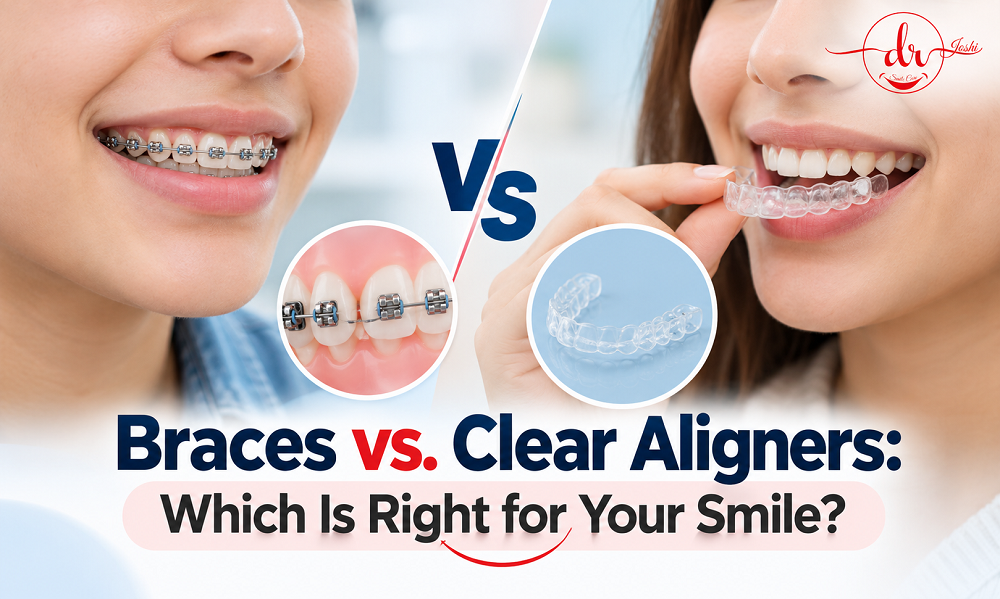
Choosing between braces and clear aligners is an important step towards a healthier, straighter smile. Braces vs. clear alignersis not simply a choice between metal and transparent trays; the right option depends on your tooth alignment, bite, treatment complexity, oral health and daily habits. A dental assessment can help determine which approach is appropriate for your needs.
What Is the Difference Between Braces and Clear Aligners?
Braces use brackets and wires attached to the teeth to guide them into their planned positions. Clear aligners use a series of removable, custom-made transparent trays that gradually move the teeth.
Both are orthodontic treatment options, but they differ in appearance, maintenance, daily convenience and suitability for particular tooth movements.
Metal brackets and wires are visible; ceramic options are also available
Transparent trays are less noticeable
Removability
Fixed to the teeth during treatment
Removable for eating and cleaning
Complex corrections
Suitable for a wide range of alignment and bite problems
Suitable for selected cases; complexity determines eligibility
Eating
Certain hard, sticky and chewy foods should be avoided
Removed before meals
Oral hygiene
Requires careful cleaning around brackets and wires
Teeth can be brushed and flossed normally, with additional tray care
Daily discipline
Remain in place without daily insertion
Must be worn consistently as prescribed
Follow-up
Regular adjustment and monitoring appointments
Regular progress checks and replacement trays as directed
Comfort
Initial soreness and irritation from brackets or wires may occur
Pressure or tenderness may occur with new trays
Cost
Depends on appliance type and case complexity
Depends on the aligner system, treatment plan and case complexity
Retention
Retainers are usually needed after treatment
Retainers are usually needed after treatment
Neither option is automatically better for everyone. The appropriate choice depends on the clinical problem and the movements required to achieve a stable result.
1. What Are Traditional Braces and How Do They Work?
Traditional braces are fixed orthodontic appliances that apply controlled forces to gradually reposition teeth. Brackets are attached to the teeth and connected by an orthodontic wire, which is adjusted according to the treatment plan.
Braces can address crowding, gaps, crooked teeth and many bite-related problems. Their fixed design means patients do not have to remember to insert them every day.
Types of Braces Available
Metal braces: These use metal brackets and wires. They are a widely used option for correcting different types of tooth misalignment.
Ceramic braces: These use tooth-coloured or relatively discreet brackets. They may appeal to patients who want a less noticeable fixed appliance.
Lingual braces: These are attached to the inner surfaces of the teeth. They offer a discreet alternative, although suitability, comfort and cost vary.
The best type depends on the treatment required, your preferences and the options available through your treating dental professional.
Benefits of Braces
They can treat a broad range of orthodontic problems.
They remain attached to the teeth throughout active treatment.
They do not depend on the patient remembering to put them back after meals.
Different appliance designs can be considered according to individual needs.
What Should You Consider Before Choosing Braces?
Fixed braces need careful cleaning because food and plaque can accumulate around brackets and wires. Hard, sticky and chewy foods may damage the appliance and should be avoided or limited as advised by your orthodontic provider.
Some soreness may occur after braces are fitted or adjusted. Regular appointments are necessary to monitor tooth movement and make changes to the appliance when needed.
2. What Are Clear Aligners and How Do They Work?
Clear aligners are custom-made, removable plastic trays designed to move teeth gradually. Patients typically progress through a planned series of trays, changing them according to their dentist’s or orthodontist’s instructions.
Because the trays are transparent, they are generally less noticeable than conventional metal braces. Their removable design also makes brushing, flossing and eating more convenient.
However, clear aligners require consistent wear. Many treatment plans prescribe approximately 20–22 hours per day, although the exact instructions depend on the system and individual treatment plan.
Benefits of Clear Aligners
Discreet appearance: Transparent trays are less noticeable in many everyday situations.
Convenient eating: Aligners can be removed before meals, allowing patients to eat without brackets or wires.
Simpler access for cleaning: Removing the trays makes normal brushing and flossing easier, provided patients maintain good oral hygiene.
Fewer appliance-related food restrictions: Patients can generally eat their usual foods after removing the aligners, subject to their dentist’s advice.
What Should You Consider Before Choosing Clear Aligners?
Aligners are not suitable for every orthodontic problem. Certain complex tooth movements or bite corrections may be more predictably managed with fixed braces or a different treatment approach.
Patients must also clean their teeth before reinserting their trays, keep the aligners clean, store them safely and follow the prescribed wear schedule. Frequently removing aligners or wearing them inconsistently can interfere with treatment progress.
Professional supervision is important for planning, monitoring and addressing unexpected problems during treatment.
3. Are Braces Better Than Clear Aligners for Complex Dental Problems?
Braces are often considered when treatment requires complex tooth movements or substantial bite correction because fixed appliances can provide precise control over a broad range of movements.
Clear aligners can treat many alignment problems, including selected cases of crowding, spacing and bite irregularities. Their suitability depends on the diagnosis, the amount and direction of movement required, and the patient’s response to treatment.
The important distinction is that treatment suitability depends on the individual case, not simply on which appliance looks better.
A dental professional may recommend braces, clear aligners or a combination of orthodontic techniques. A clinical examination and appropriate diagnostic records help determine the most suitable approach.
4. Which Is More Comfortable: Braces or Clear Aligners?
Both treatments can cause temporary pressure or soreness as the teeth begin moving.
With braces, discomfort may occur after fitting or adjustment, and brackets or wires can sometimes irritate the cheeks and lips. With clear aligners, pressure or tenderness may occur when starting a new tray.
Some patients find aligners more convenient because they have no fixed brackets or wires. Others may prefer braces because they do not have to manage removable trays throughout the day.
Comfort varies between individuals. Neither treatment should be described as completely painless, and persistent or severe pain should be assessed by the treating dental professional.
5. Which Is Easier to Clean and Maintain?
Both treatments require good oral hygiene, but the cleaning routine differs.
Cleaning with Braces
Brush carefully around brackets and along the gumline.
Clean between teeth and around wires using suitable interdental aids.
Follow advice about foods that can damage the appliance.
Attend routine dental and orthodontic appointments.
Cleaning with Clear Aligners
Remove aligners before eating unless specifically instructed otherwise.
Brush and floss your teeth before reinserting them.
Clean and store trays according to the manufacturer’s and clinician’s instructions.
Avoid consuming sugary or acidic drinks with trays in place unless your provider advises otherwise.
Wear the trays for the prescribed number of hours.
Removable aligners make it easier to access the tooth surfaces, but they do not remove the need for consistent cleaning. Poor hygiene during either treatment can contribute to tooth decay or gum problems.
6. Which Treatment Is Faster: Braces or Clear Aligners?
There is no universal answer. Treatment duration depends on the original alignment, bite problems, complexity of the required tooth movements, patient cooperation and response to treatment.
Some limited alignment problems may require less time than more complex cases. However, it would be misleading to promise that braces or clear aligners are always faster.
Aligner treatment can be delayed when trays are not worn as prescribed or teeth do not track according to the plan. Braces may also require additional time if brackets break, appointments are missed or treatment needs to be modified.
During your consultation, ask for an estimated treatment timeline, the expected review schedule and the factors that could extend treatment.
7. Are Clear Aligners More Expensive Than Braces?
The cost of orthodontic treatment varies according to the appliance, case complexity, duration, diagnostic requirements, follow-up care and the clinic’s treatment plan.
Clear aligners may cost more than some conventional braces options, but this is not a universal rule. Ceramic or lingual braces and complex cases can also affect the total fee.
When comparing treatment quotations, ask whether the following are included:
Initial consultation and diagnostic records.
The appliance and planned treatment stages.
Routine progress appointments.
Replacement trays or repairs, where applicable.
Refinements or additional treatment, if required.
Retainers after active treatment.
Any additional procedures recommended before or during orthodontic treatment.
A written, individualised quotation is more useful than relying on a generic online price. Dr. Joshi Smile Care can discuss the available treatment options and associated costs following an appropriate assessment.
8. Are Braces or Clear Aligners Better for Teenagers and Adults?
Both teenagers and adults may be candidates for orthodontic treatment. Age alone does not determine whether braces or aligners are appropriate.
For Teenagers
Fixed braces may be useful when a teenager needs complex correction or may find it difficult to maintain consistent aligner wear. Clear aligners can be an option for selected teenagers who meet the clinical requirements and can follow the treatment instructions.
Parents and caregivers can help by supporting oral hygiene, attendance at appointments and adherence to the treatment plan.
For Adults
Adults may prefer clear aligners because of their discreet appearance and removable design, particularly in professional or social settings. However, adults can also benefit from conventional, ceramic or other appropriate types of braces.
Before starting treatment, a dental professional should assess gum health, existing restorations, previous dental treatment and the condition of the teeth. Orthodontic treatment should be planned around overall oral health, not appearance alone.
9. How Do You Choose the Right Option for Your Smile?
1. What needs to be corrected? Crowding, gaps, crooked teeth and bite problems may require different approaches.
2. Is your oral health ready for treatment? Cavities, gum inflammation or other dental problems may need attention before orthodontic treatment begins.
3. How important is appearance? Transparent aligners and certain types of braces offer less noticeable alternatives to conventional metal braces.
4. Can you follow the daily routine? Aligners require consistent wear and careful handling. Fixed braces require careful cleaning and attention to food restrictions.
5. What does your treatment plan include? Compare the expected timeline, follow-up appointments, overall cost, retention and any additional procedures.
6. What does the dental assessment recommend? Your clinician can explain which options can reasonably achieve your treatment goals and the advantages and limitations of each.
10. Considering Braces and Clear Aligners in Bhopal?
If you are exploring orthodontic treatment in Bhopal, start with a dental assessment rather than choosing an appliance based only on appearance or advertising.
At Dr. Joshi Smile Care, patients can enquire about available dental treatment options and discuss their concerns with the clinic. An appropriate assessment can help establish whether braces, clear aligners or another approach should be considered.
Before committing to treatment, ask about the proposed correction, expected duration, total estimated cost, follow-up requirements and retention plan.
The goal is not simply to straighten visible teeth. It is to plan treatment that supports oral health, a functional bite and a result that can be maintained over time.
Conclusion: Braces vs. Clear Aligners — Which Should You Choose?
Braces and clear aligners can both help correct tooth misalignment, but they suit different clinical needs and lifestyles.
Braces may be preferable for some complex cases and for patients who want a fixed appliance. Clear aligners may suit selected patients who value a discreet, removable option and can maintain the required wear schedule.
Neither is automatically the best choice for everyone. A professional assessment is the most reliable way to understand your options, likely treatment duration and expected costs.
If you are considering braces or clear aligners in Bhopal, contact Dr. Joshi Smile Care to enquire about an orthodontic assessment and discuss which treatment options may be appropriate for your smile.
Neither is universally better. Braces can treat a broad range of orthodontic problems, while clear aligners are suitable for many, but not all, cases. The appropriate option depends on diagnosis, treatment complexity and patient preferences.
2. Can clear aligners correct crooked teeth and gaps?
Yes. Clear aligners can correct many cases of crooked teeth, crowding and gaps. More complex movements may require braces or another approach, so an individual assessment is important.
3. Do clear aligners need to be worn all day?
Many treatment plans recommend wearing clear aligners for approximately 20–22 hours daily. Your treating professional will specify the required wear schedule for your particular system.
4. How long does treatment with braces or aligners take?
Treatment time varies with the complexity of the case, the movements required, patient cooperation and response to treatment. Your dentist or orthodontist can provide an individual estimate after assessment.
5. Are clear aligners more expensive than braces?
They can be, but not in every case. The total cost depends on the appliance, treatment complexity, clinic fees, follow-up care and any additional procedures or retainers.
6. Do I need retainers after braces or clear aligners?
Retainers are generally recommended after orthodontic treatment to help maintain the corrected tooth positions. Your dental professional will advise on the type, duration and schedule of retainer use.
Disclaimer
This article is for informational purposes only and does not replace professional dental advice, diagnosis, or treatment. Consult a qualified dentist to determine the right treatment for your needs.
Dr. Viplav Joshi is a dentist based in Bhopal, Madhya Pradesh, with more than 25 years of experience in dental care. His professional focus includes endodontics, root canal treatment and restorative dentistry. He is associated with Dr. Joshi Smile Care, which provides a range of dental services.