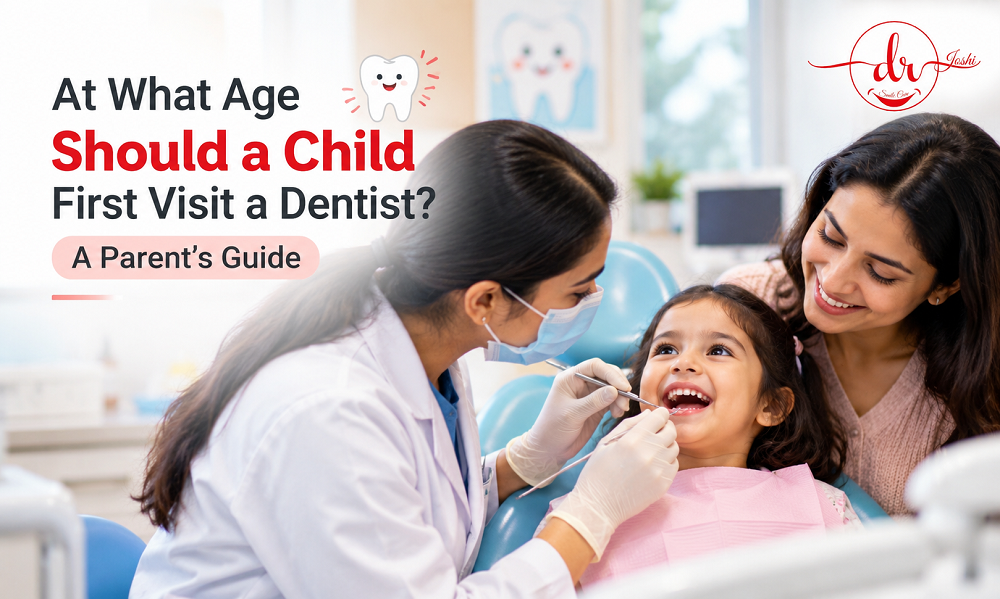
A child’s first dental visit should generally take place when the first tooth appears, or no later than the first birthday. This early appointment helps a dentist check the development of the teeth and gums, identify early signs of tooth decay and guide parents on brushing, feeding habits and preventive dental care.
Parents do not need to wait until their child develops a toothache or has a full set of baby teeth. Early dental visits focus on prevention, healthy development and helping children become comfortable with dental care.
For families in Bhopal, understanding the right time for a first dental checkup can make it easier to establish good oral hygiene habits from infancy.
A child should ideally visit a dentist after the first baby tooth erupts and before their first birthday. The Indian Dental Association and major dental organisations recommend establishing dental care during the first year of life.
Use the following guide to understand when to arrange an appointment.
Child’s age or stage
Recommended action
Before the first tooth appears
Clean the gums gently and ask a dental professional about age-appropriate oral care.
When the first tooth erupts
Arrange the first dental appointment.
By the first birthday
Ensure the child has had an initial dental assessment, even if no obvious problem is present.
After the first visit
Follow the dentist’s recommended checkup schedule based on the child’s needs and risk of tooth decay.
The timing of the first visit is important because baby teeth can develop cavities soon after they erupt. A dental professional can identify risk factors and help parents understand how to protect those teeth.
Why is the first dental visit important for babies?
The first dental appointment is not only about checking for cavities. It establishes a foundation for preventive oral healthcare as the child grows.
1. It helps identify early tooth decay
Baby teeth have a role in chewing, speech development and maintaining space for the developing permanent teeth. Tooth decay in baby teeth can cause pain, infection and difficulty eating.
A dentist can examine the teeth for early signs of decay and advise parents about prevention and treatment when necessary.
2. It helps parents learn the correct brushing technique
Parents often have questions about when to start brushing, which toothbrush to choose and how much toothpaste to use.
A dental professional can explain age-appropriate brushing methods, toothpaste quantities and how to clean areas that are difficult to reach.
3. It provides feeding and dietary guidance
Frequent exposure to sugary drinks and foods can contribute to tooth decay. Feeding practices, including putting a baby to bed with a bottle containing milk, formula or juice, may also influence oral health.
During the first visit, parents can discuss feeding routines, drinks, snacks and ways to reduce unnecessary sugar exposure.
4. It helps children become familiar with dental care
An early, positive introduction to dental care can help children become more comfortable with dental appointments.
The first visit also gives parents an opportunity to ask questions before a dental problem becomes urgent.
What happens during a child’s first dental visit?
A child’s first dental appointment is generally focused on examination, prevention and parental guidance. The exact process depends on the child’s age, medical history, oral development and symptoms.
What the dentist may check
During the appointment, the dentist may:
Examine the teeth and gums for signs of decay, irritation or other concerns.
Review tooth eruption and oral development.
Ask about feeding habits, brushing routines and exposure to sugary foods and drinks.
Assess the child’s risk of developing tooth decay.
Discuss fluoride use and other preventive measures where appropriate.
Recommend further examination or treatment if a concern is identified.
Not every child needs an X-ray, cleaning procedure or dental treatment during the first visit. These decisions should be based on clinical findings and the child’s individual needs.
Will the first dental visit be painful?
A routine examination is generally gentle and non-invasive. The dentist may use a small mirror or other suitable instruments to inspect the mouth.
If a problem requiring treatment is identified, the dentist should explain the options to the parent or guardian before proceeding. The approach should be appropriate for the child’s age, comfort and clinical needs.
How can parents prepare for a child’s first dental appointment?
A little preparation can help make the first dental visit more comfortable for both the child and the parent.
Before the appointment:
Choose a time when your child is usually rested and settled.
Explain the visit in simple, reassuring language.
Avoid describing the dentist as someone who will punish, frighten or hurt the child.
Bring relevant medical information and a list of medications, if applicable.
Note any concerns about feeding, brushing, tooth eruption or changes in the mouth.
Tell the dental team if your child has had a previous difficult medical or dental experience.
Parents do not need to make the child understand every detail of the appointment. A calm, positive introduction is usually more helpful than repeatedly discussing possible discomfort.
How should parents care for baby teeth before the first visit?
Oral care begins before a baby’s first tooth appears. Establishing simple routines early can help protect the gums and emerging teeth.
Clean the gums before teeth erupt
Gently wipe the baby’s gums with a clean, damp, soft cloth. This introduces an oral hygiene routine before teeth begin to appear.
Start brushing when the first tooth appears
Use a small, soft-bristled toothbrush suitable for infants. Parents or caregivers should perform the brushing because young children cannot clean their teeth effectively on their own.
Use an age-appropriate amount of toothpaste
The Indian Dental Association advises parents to seek professional guidance about fluoride and the child’s individual risk of tooth decay. Its guidance distinguishes toothpaste use according to age and risk.
The American Dental Association recommends brushing twice daily with a smear of fluoride toothpaste approximately the size of a grain of rice for children younger than three years, and a pea-sized amount for children aged three to six years.
Parents should follow advice appropriate to the child and use only the recommended amount. Children should be supervised while brushing.
Limit frequent exposure to sugary foods and drinks
Avoid routinely giving sugary drinks between meals or putting a baby to sleep with a bottle containing juice or other sugary liquids. Ask the dentist for guidance on feeding patterns and drinks as the child grows.
Make brushing part of the daily routine
Brush twice a day when the teeth have erupted, including before bedtime. Continue helping and supervising children as they grow rather than assuming that they can brush effectively on their own.
How often should children have dental checkups?
The next dental appointment should be scheduled according to the child’s oral health, risk of decay and the dentist’s clinical advice.
The Indian Dental Association describes six-monthly preventive care for many children, while also recognising that visit frequency should depend on individual risk and susceptibility to disease.
Some children may need earlier or more frequent assessments, particularly when there are signs of tooth decay, previous cavities, persistent feeding-related concerns or other risk factors.
Parents should therefore ask for a personalised follow-up schedule rather than assuming that every child needs exactly the same interval between visits.
What signs mean a child should see a dentist sooner?
Parents should not wait until the first birthday if a dental concern develops earlier.
Arrange a dental assessment if you notice:
White, brown or dark spots on a tooth.
Visible holes, rough areas or damaged tooth surfaces.
Persistent discomfort or sensitivity around the mouth.
Swollen, bleeding or unusually irritated gums.
Difficulty chewing or eating that may be related to the teeth or mouth.
A tooth injury or an unusual change in the mouth.
Seek urgent dental or medical care if a child has facial swelling, fever associated with suspected dental infection, rapidly worsening symptoms or difficulty swallowing or breathing. Difficulty breathing or swallowing requires emergency medical assessment.
These signs do not establish a diagnosis by themselves. A dental professional needs to assess the child to determine the cause and appropriate treatment.
How can parents find suitable children’s dental care in Bhopal?
Clear explanations of findings and treatment options.
Age-appropriate communication and behaviour guidance.
Transparent discussion of recommended procedures and costs.
A clear plan for follow-up and preventive care.
Families in Bhopal can contact Dr. Joshi Smile Care to enquire about children’s dental checkups and the clinic’s approach to early preventive care. Parents should confirm appointment availability and whether the particular service is suitable for their child’s needs.
A first visit does not automatically mean that treatment will be required. In many cases, the main purpose is to assess development, identify risks and help parents establish good oral hygiene habits.
What if your child has already passed their first birthday?
If your child is older than one year and has never visited a dentist, arrange an appointment rather than delaying it further.
The dentist can assess the current condition of the teeth and gums, identify any concerns and recommend an appropriate preventive care schedule.
There is no need to feel guilty about a delayed first visit. The important step is to establish care now and address any problems identified during the examination.
Conclusion
A child’s first dental visit should generally take place when the first tooth appears, or no later than the first birthday. Early checkups allow a dentist to assess oral development, identify potential problems and guide parents on brushing, feeding habits, fluoride use and preventive care.
Parents do not need to wait for a toothache or visible cavity to seek advice. If your child has not yet had a first dental checkup, consider arranging an appointment with a dentist who can assess their needs and explain the next steps.
Families in Bhopal can contact Dr. Joshi Smile Care to enquire about suitable children’s dental care and preventive checkups.
A baby should generally visit a dentist after the first tooth appears, or by the first birthday at the latest. Early care helps identify risks and establish preventive oral hygiene habits.
2. Can a baby visit a dentist before the first tooth appears?
Yes. Parents can seek advice about gum cleaning, feeding habits and oral care before the first tooth erupts. If a concern arises, the dentist can determine whether an examination is needed.
3. Why do baby teeth need dental checkups if they eventually fall out?
Baby teeth help children chew and speak and maintain space for developing permanent teeth. Decay can cause pain and infection, so baby teeth still need appropriate preventive care.
4. How often should a child have a dental checkup?
The interval depends on the child’s oral health and risk of decay. Six-monthly visits are common in preventive dental care, but some children may need a different schedule based on professional advice.
5. Should I wait until my child has a full set of baby teeth?
No. The recommended first visit is much earlier—when the first tooth appears or by the first birthday. Waiting for all baby teeth to erupt may delay preventive guidance.
6. Where can parents arrange a children’s dental checkup in Bhopal?
Parents can contact a dentist or dental clinic that provides care for young children. Dr. Joshi Smile Care can be approached to enquire about suitable appointments and available children’s dental services.
Disclaimer
This article is intended for general educational and informational purposes only. It does not replace professional dental advice, diagnosis or treatment. Every child’s dental needs are different. Consult a qualified dental professional for advice tailored to your child’s oral health. If your child experiences facial swelling, severe dental pain or other concerning symptoms, seek prompt professional assessment. Difficulty breathing or swallowing requires emergency medical care.
Dr. Viplav Joshi is a dentist in Bhopal specialising in endodontics, including root canal treatment. According to his professional biography, he has more than 25 years of experience in dentistry, with a focus on root canal therapy and restorative dentistry.
This article provides general information about children’s first dental visits and preventive oral healthcare. Individual dental recommendations should be based on a child’s age, oral health and clinical assessment.